Showing posts with label Uniforms. Show all posts

Wednesday, June 7, 2017

More Memories Of Uniform - Everybody Else Edition

There are a handful of teams in Japanese professional baseball history that longer exist.  Many of these teams "merged" into other teams but some merely folded.  The BBM Memories Of Uniform set really didn't address any of these teams (with the exception of Kintetsu) so I thought I'd finish off this series of posts with a round up of these teams.  I'm not expecting to find too many representative cards as the most recent team to disappear before Kintetsu in 2004 was the Daiei Unons in 1957.

As always I'm using The History Of Uniform and the Professional Baseball Uniforms Encyclopedia 1936-2013 as sources.

Dai Tokyo


The Dai Tokyo team was one of the original teams in the Japanese Baseball League (JBL) in 1936.  As you might guess from the name, they played in Tokyo.  They changed their name to Lion (yes, singular) midway through the Fall 1937 season (the JBL played a fall season in 1936 and spring and fall seasons in 1937 and 1938).  In 1941 the team moved to Osaka and changed their name to Asahi.  Pro baseball in Japan shut down in 1945 due to the war.  When things started up again in 1946 the team was now known as Pacific.  The name changed again to the Taiyo Robins in 1947 - the "Taiyo" involved was the fabric store owned by team owner Komajiro Tamura - Taiyo Rayon, as opposed to the Taiyo Fishing Company, an amateur baseball team owned by the Maruha Corporation that would become the Taiyo Whales in 1950.  Tamura sold a share of the team to the Shochiku movie studio and the team was renamed the Shochiku Robins in 1950 as they moved into the Central League when the single league JBL transformed into the two league Nippon Professional Baseball organization.  The Robins won the initial Central League pennant that year before losing to the Mainichi Orions in the first Nippon Series.  The team merged with the Taiyo Whales following the 1952 season to become the Taiyo Shochiku Robins in 1953 and the Yosho Robins in 1954.  Shochiku divested themselves of the team after 1954 and the team named reverted to the Taiyo Whales.  (Source Wikipedia.)

I've covered the merged team's uniforms with the Baystars uniform history so I'm only doing up to 1952 here.

1936-37 (2 different)

1937-40 (4 different)

1940-42 (2 different)

1941-43 (2 different)

1946 (2 different)

2004 BBM Golden Arms #001
1947-48 (2 different)

2012 BBM No-Hitters #21
1949 JBR 53 (Junzo Sanada)
1949 (2 different)

1950 Home (2 different)

2006 BBM Nostalgic Baseball #035
1950 Away (2 different)

2006 BBM Nostalgic Baseball #036
~1950 Uncatalouged Giant Bromide (Makoto Kozuru)
1951 Home

2006 BBM Nostalgic Baseball #034
1951 Away

1952 Home

1952 Away
2000 BBM 20th Century Best 9 #209

Tokyo Senators


Another one of the inaugural JBL teams in 1936 was the Tokyo Senators.  The team changed it's name to Tsubasa in 1940 as part of the move away from English names in the league.  They merged with the Nagoya Kinko club in 1941 and became known as Taiyo (which as far as I know had no relation to either the Taiyo Robins or the Taiyo Whales).  They were sold to the Nishi-Nippon Railroad and renamed Nishitetsu for the 1943 season, after which they folded.  Nishi-Nippon of course ended up with two teams in 1950 - the Nishitetsu Clippers and Nishi-Nippon Pirates who merged to become the team now known as the Saitama Seibu Lions.  This is why the Lions wore Tokyo Senators uniforms for the Lions Classic series in 2013.  (Source Wikipedia.)

1936-37 (2 different)

1937-40 (2 different)
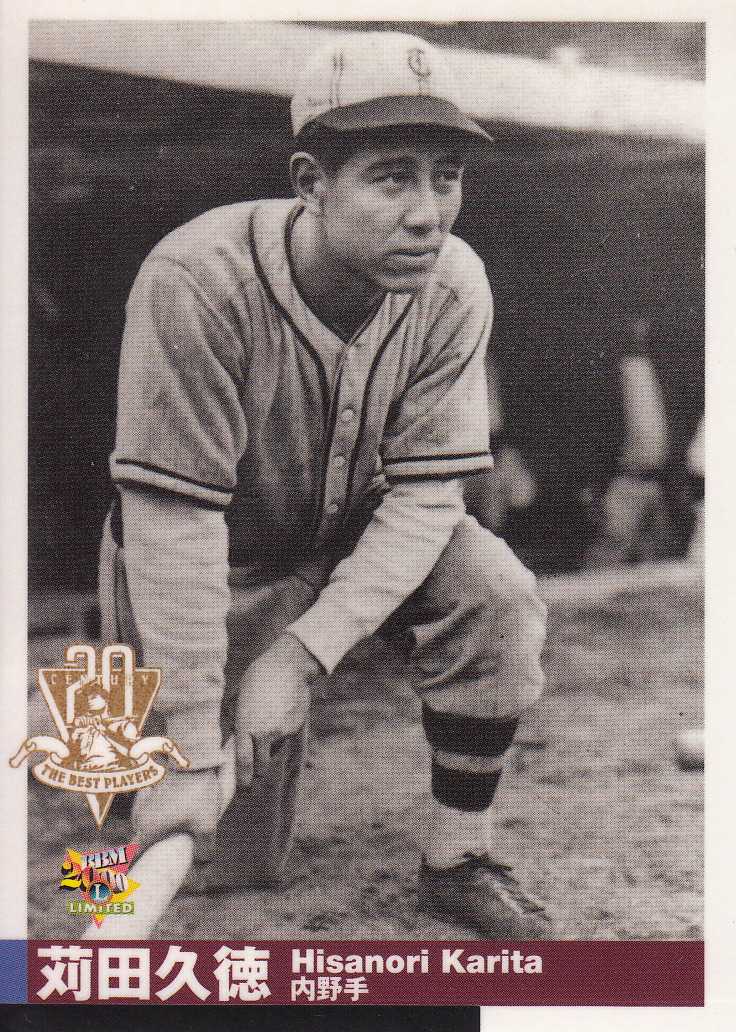
2000 BBM 20th Century Best 9 #049

2006 BBM Nostalgic Baseball #060

1941-42 (2 different)

2000 BBM 20th Century Best 9 #169
1943

Nagoya Kinko


The Nagoya Golden Dolphins were another inaugural JBL team in 1936.  They changed their name to Nagoya Kinko in 1937 and kept that name until they merged with Tsubasa in 1941.   (Source Wikipedia.)

1936-37 (2 different)

1937-40 (2 different)

Korakuen Eagles


The Korakuen Eagles entered the JBL in time for the spring 1937 season.  They changed their name to Kurowashi in 1940 and then to Yamato in 1942 when they were purchased by Yamato Ironworks  president Kenkichi Saeki.  The team folded following the 1943 season.  (Source Wikipedia.)

1937 (3 different)

2000 BBM 20th Century Best 9 #385

2000 BBM 20th Century Best 9 #265
1938-40 (2 different)

2012 BBM No-Hitters #06
1940-42 (2 different)

Gold Star


The Gold Star team entered the JBL when the league resumed business in 1946 after the war.  They were owned by Komajiro Tamura, the same man who owned the Taiyo Robins.  The team changed its name to the Kinsei Stars in 1947.  Tamura sold the team to the Daiei Motion Picture Company (not to be confused with the Daiei Supermarket chain which owned the Hawks from 1989 to 2004 - that chain would not be founded until 1957) before the 1949 season and the team was renamed the Daiei Stars.  The team would merge with the Takahashi Unions in 1957 to become the Daiei Unions and them again with the Mainichi Orions in 1958 to become the Daimai Orions.  (This was the final merger in NPB until Orix and Kintetsu merged following the 2004 season and it brought the number of teams down to twelve.)  (Source Wikipedia.)

1946 (2 different)

~1946 Uncatalouged Bromide (Isao Tsuji)

~1946 Uncatalouged Bromide (Michio Nishizawa)
1947-48 (2 different)

~1948 Uncatalouged Bromide (Hatsuo Kiyohara)

1948 (2 different)

1949-50 (2 different)

2000 BBM 20th Century Best 9 #362
~1949 Uncatalouged Bromide (Shigeya Iijima)
1951-54 Home

2012 BBM No-Hitters #24
1951-54 Away

1953-54 Home

1953-54 Away

1955-56 Home (2 different)

1955-56 Away

1957 Home

1957 Away

2006 BBM Record Makers #072

Takahashi Unions


The Takahashi Unions entered the Pacific League in 1954 in an attempt to bring the league to an even number of teams after four seasons of having an unwieldy seven teams in the league.  The team was owned by and named for Ryutaro Takahashi who had owned the Korakuen Eagles from 1939 to 1941.  The team's name changed to the Tombow Unions in 1955 when Tombow Pencil bought into the team and reverted to the Takahashi Unions when Tombow dropped their share of the team in 1956.  The team merged with the Daiei Stars in 1957 to become the Daiei Unions (which put the Pacific League back at seven teams until the Unions merged with the Orions the following season).  (Source Wikipedia.)

The Unions played all three seasons at Kawasaki Stadium - the team they eventually merged into would call this stadium home from 1978 to 1991.

1954 Home

2000 BBM 20th Century Best 9 #242
1954 Away

1955 Home

1955 Away

1956 Home

1956 Away

~1956 Uncatalouged Bromide (Shiro Itoh)
Notes:

This was going to be a tough one as half of these teams didn't survive the war so they didn't exist when there were any baseball cards of professional teams.  I did the best I could.

Neither source shows a Yamato uniform for 1943.

I'm pretty sure that's the 1951 Robins home uniform being worn by Ohoko because of the red sleeves.  There's a patch on the right arm that indicates the Robins were the 1950 Central League champs but it can't be seen in this shot.

It's hard to tell since they're black and white photos but those are actually two different uniforms in the two Harris McGalliard cards.  The uniform in the photo with his hat off is white while the uniform in the other photo is grey.  I'm assuming this from HOU saying that the white uniforms used white socks with a black stripe while the grey uniforms used black socks with white stripes.

UPDATE 12/31/17 - Added Gold Star and Kinsei Stars uniforms

Tuesday, February 7, 2017

More Memories Of Uniform - Japan National Team Edition

This will be a bit different from all the other uniform posts.  There have been a variety of "Japan National Teams" over the years made up of professionals or amateurs (and in some cases both).  The coverage of these teams on baseball cards has been pretty sporadic at least up until the past 20 years or so.  What I'm going to do is simply show what I've got and not worry about what I know about but don't have cards from (like the 1934 All Nippon team).

The History Of Uniform and the Professional Baseball Uniforms Encyclopedia 1936-2013 both have some coverage of this topic.

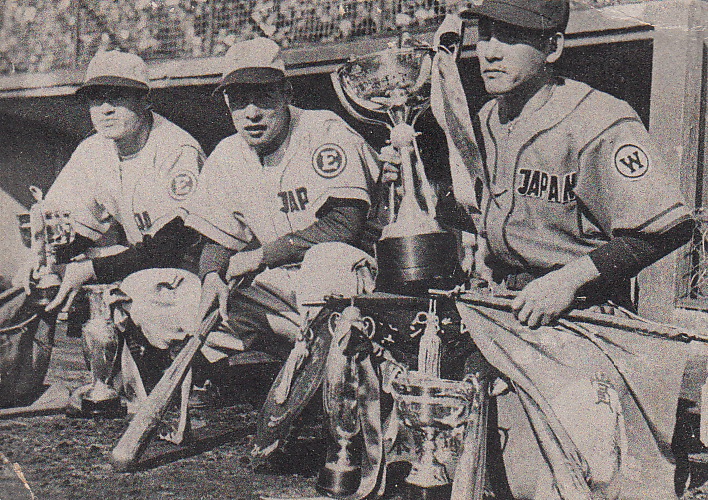
There was some sort of team or teams in 1949.  I think the teams were split up between East and West as there's a patch on the left sleeve with an "E" or a "W" on it.  This maybe the uniform worn in the games against the San Francisco Seals during their tour that fall.

~1950 Uncataloged Bromide
The following uniform was apparently worn in 1951, 1953 and 1956.  I assume it was to play against visiting MLB teams but that's just a guess on my part.  HOU indicates that the letters "CBL" appeared on the left sleeve in the 1953 version of the uniform so I guess that means this photo is not from 1953.  I see the numbers "51" and "55" on the back of the card so maybe the photo is from 1951.  That's Masaichi Kaneda standing - not sure who the kneeling player is.

2009 BBM Masaichi Kaneda Ultimate Southpaw #19
Skipping ahead a few years...

The nest Japan National Team I have any cards for is the 2000 Olympic team.  This was the first Olympics to use professionals for baseball and both Upper Deck and Calbee had cards for the team.  There doesn't appear to be a home and away version of the uniform but that may be do to the photo selection.

2001 Calbee Japan National Team #J-05
The 2001 Baseball World Cup uniforms looked a little different and there's definitely a home and away version:

2001 BBM Japan National Team #44

2001 BBM Japan National Team #2
The 2003 Asia Baseball Championship was held in November that year and was a qualifier for the 2004 Olympics.  The uniform design had some slight changes from the 2001 BBWC design.

2003 BBM Japan National Team #07

2003 BBM Japan National Team #21
 This was the same uniform worn in the 2004 Olympics although there were no cards made for that team (at least none that I'm aware of).

The 2006 World Baseball Classic team rolled out a completely different look:

2006 Upper Deck WBC Box Set #33

2006 Upper Deck SP Authentic Future Watch #WBC-60
The 2007 Collegiate All-Star team wore a different uniform as well:

2008 Upper Deck USA National Teams Box Set #JN-17
For the 2008 Olympics, the National team went back to the same (or very similar) uniforms as were worn in the 2004 Olympics:

2008 BBM Japan National Team #JPN18

2008 BBM Japan National Team #JPN25
The Collegiate National Team wore similar uniforms that season:

2008 BBM Japan Collegiate National Team #CN02

2008 BBM Japan Collegiate National Team #CN20
The 2009 World Baseball Classic team unveiled yet another new look:

2009 Bowman Draft Picks WBC #BDPW34

2009 Konami Baseball Heroes WBC #W09S001
And then another new look for the 2013 WBC:

2013 Topps Tribute WBC #19

2013 Topps Tribute WBC #82
The 2013 Collegiate National Team wore similar uniforms to those of the WBC team:

2013 Panini USA Baseball Box Set Japanese All-Stars #17
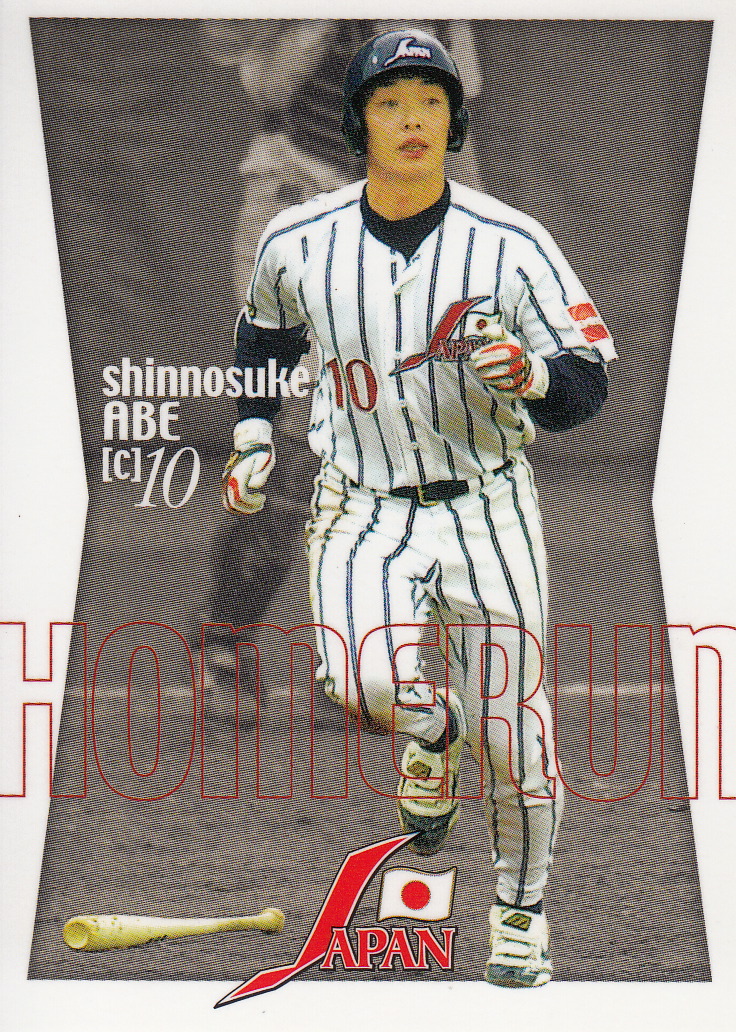
In November 2013 the national team was dubbed "Samurai Japan" and new uniforms were rolled out for all levels of the team both professional and amateur.  This has been the uniform worn for all international events the past few years including friendlies against MLB, Europe, China, the Netherlands and Mexico as well as the Premier 12:


2016 Calbee Samurai Japan #SJ-23

2016 Calbee Samurai Japan #SJ-02
The 2017 World Baseball Classic team will wear uniforms that are very similar to the Samurai Japan uniforms from the past few years.

Saturday, February 4, 2017

More Memories Of Uniforms - Kintetsu Edition

The team that was ultimately known as the Osaka Kintetsu Buffaloes began life in 1950 as the Kintetsu Pearls and were one of several teams that joined the new Pacific League when the old Japan Baseball League transformed into the new two league Nippon Professional Baseball organization.  The team changed their name to the Kintetsu Buffalo in 1959 when they hired former Giants star Shigeru Chiba as manager - Chiba's nickname was Mogyu which translates as either "wild" or "formidable" Buffalo.  The name went plural in 1962 and the city/prefecture name was added in 1999.  Officially the team "merged" with the Orix Blue Wave after the 2004 season but in reality the Buffaloes were simply absorbed by Orix.  The Kintetsu corporation completely divested itself of the team, none of Orix's team records include anything from any Kintetsu players and Orix has not even recognized the one uniform number Kintetsu retired (Keishi Suzuki's #1).  About the only acknowledgement of Kintetsu that I see by Orix is the use of Kintetsu uniforms in "turn-back-the-clock" games.

As always I'm using The History Of Uniform and the Professional Baseball Uniforms Encyclopedia 1936-2013 as sources.  The uniform posts from Yakyu Baka and Yakyu DB don't go back far enough to cover Kintetsu.

1950-52 Home

1950-53 Home

1950-57 Away (2 different)

2009 BBM Kintetsu Memorial #09
1954-58 Home

2004 BBM Kintetsu Memorial #K32
1958 Home

1958 Away

2000 BBM 20th Century Best 9 #184
1959 Home

1959 Doyusha JCM 30b (Shigeru Chiba)
1959 Away

1959 Marusan JCM 12a (Junzo Sekine)
1960-61 Home

1962 Doyusha JCM 55 (Junzo Sekine)
1960-61 Away

1960 Marusan JCM 43e (Glenn Mickens)
1962-64 Home

2014 BBM Brilliant Teenagers #133
1962-64 Away

2004 BBM Kintetsu Memorial #K35
1965 Home

2009 BBM Kintetsu Memorial #12
1965 Away

1966-71 Home

1966-71 Away

2015 BBM Memories Of Uniform #133
1972-73 Home

2014 BBM Brilliant Teenagers #135
1972-73 Away

1973 Home

2011 BBM Legend Of The Bs #51 (Takashi Iwamoto)
1973 Away

1974-76 Home

2015 BBM Memories Of Uniform #134
1974-76 Away

1975/76 Calbee #544 Kohei Shimamoto
1977 Home

2010 Epoch All Japan Baseball Foundation 1977 #59
1977 Away

2011 BBM Legend Of The Bs #52 (Yukio Nishimoto)
1978-96 Home

1994 Calbee Hokkaido #C-25 (Hideo Nomo)
1978-96 Away

1992 Calbee #41
1997-2004 Home

2001 BBM Nippon Series #S55
1997-98 Away Black

1997 BBM #153
1997-98 Away Red

2015 Memories Of Uniform #135
1999-04 Away Black

2015 Memories Of Uniform #136
1999-04 Away Red

Notes:

The away uniforms from the 1950's are very confusing.  HOU lists one of the two styles as being from 1950-52 while PBUE has three different listings for it - two different ones for 1950-52 and one for 1950-57.  Looks like all three have the same uniform style but different hat designs.  HOU has the other style as being from 1950-53 while PBUE only lists it as being from 1957.  HOU has no away uniform listed for 1954-57.  I decided to use the 1950-57 time period for both of them.

The only difference in the 1966-71 and the 1972-73 uniforms is that the hat has a colored brim in the later version.  There was a hat with the "buffalo" logo that was apparently an alternate hat between 1969 and 1971 as well.  I've also seen some cards with photos from the mid-70's showing a variant of this hat that is not listed in either source.

The uniforms listed as 1973 differ from the 1972-73 uniforms in that they have trim at the collar and sleeve cuffs and have solid red stirrups rather than black, white and red.  That said, I'm not positive that the card of Iwamoto shows him in this uniform since I can't see the stirrups.  I'm pretty sure there's trim on his jersey though.

The main difference between the 1975-76 uniforms and the 1977 uniforms was that the emblem on the left sleeve changed.  The main difference between the 1977 and 1978-86 uniforms was that the player's name was added to the back and the hat design changed.

The Chiba and Sekine menko cards don't have the correct colors.

I don't know why Keishi Suzuki is wearing the 1962-64 home uniform in that Brilliant Teenagers card when he didn't join the Buffaloes until 1966.  My only guess is that they wore the old uniforms in training camp that year.

I just have to add that that Tuffy Rhodes card is one of my all time favorites.